The Co-Construction of Teacher and Child Subjectivities: A Psycho-Social Exploration
Physiotherapists are encouraged to follow the best evidence in their practice. However, there is limited evidence for non-ambulatory children with cerebral palsy combined with intellectual disability due to challenges in producing high-level research in this population. This project aims to investigate what interventions are suitable for these children to aid physiotherapists working with these children in Aotearoa.
Progress to date
- Phase 1 – Integrative review completed. Two papers were written from fundings, with one accepted for submission and the second recently submitted also.
- Phase 2 – Vignette survey to physiotherapists working with this population. Survey completed and data analysed. The article is currently being written discussing the findings.
- Additional phase – Working with the New Zealand Cerebral Palsy Registry. Data from the registry were received regarding all children on the registry who are non-ambulatory. Data analysed and currently being written discussing findings.
- Phase 3 – To start 2026. Synthesise findings of phases 1 and 2 to provide a framework of care to support non-ambulatory children with cerebral palsy combined with intellectual disability in Aotearoa.
Preliminary findings
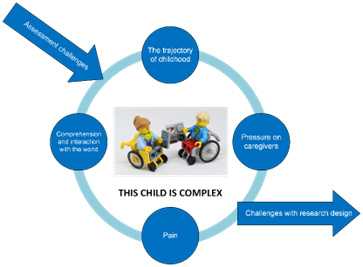
Only six physiotherapy interventions are identified in the current literature base that would be suitable for non-ambulatory children with cerebral palsy combined with intellectual disability, which are power wheelchair training, static standing frames, dynamic standing frames, night-time positioning equipment, gaming and functional movement. These interventions support the child at a body structure and function, activity and participation level. Physiotherapists in Aotearoa identified numerous interventions that they would use which cover the same goals but also transdisciplinary goals, including those usually within a speech and language therapist’s or occupational therapist’s professional domain. There are numerous challenges with research on non-ambulatory children with cerebral palsy combined with intellectual disability which limit the research available.
Related links
Integrative review findings presented back for non-ambulatory children with cerebral palsy combined with intellectual disability and their families in Aotearoa:
Research Team
- Dr Julie Blarmires
- Dr Julia Hill
- Karen Adams (PhD Candidate)